
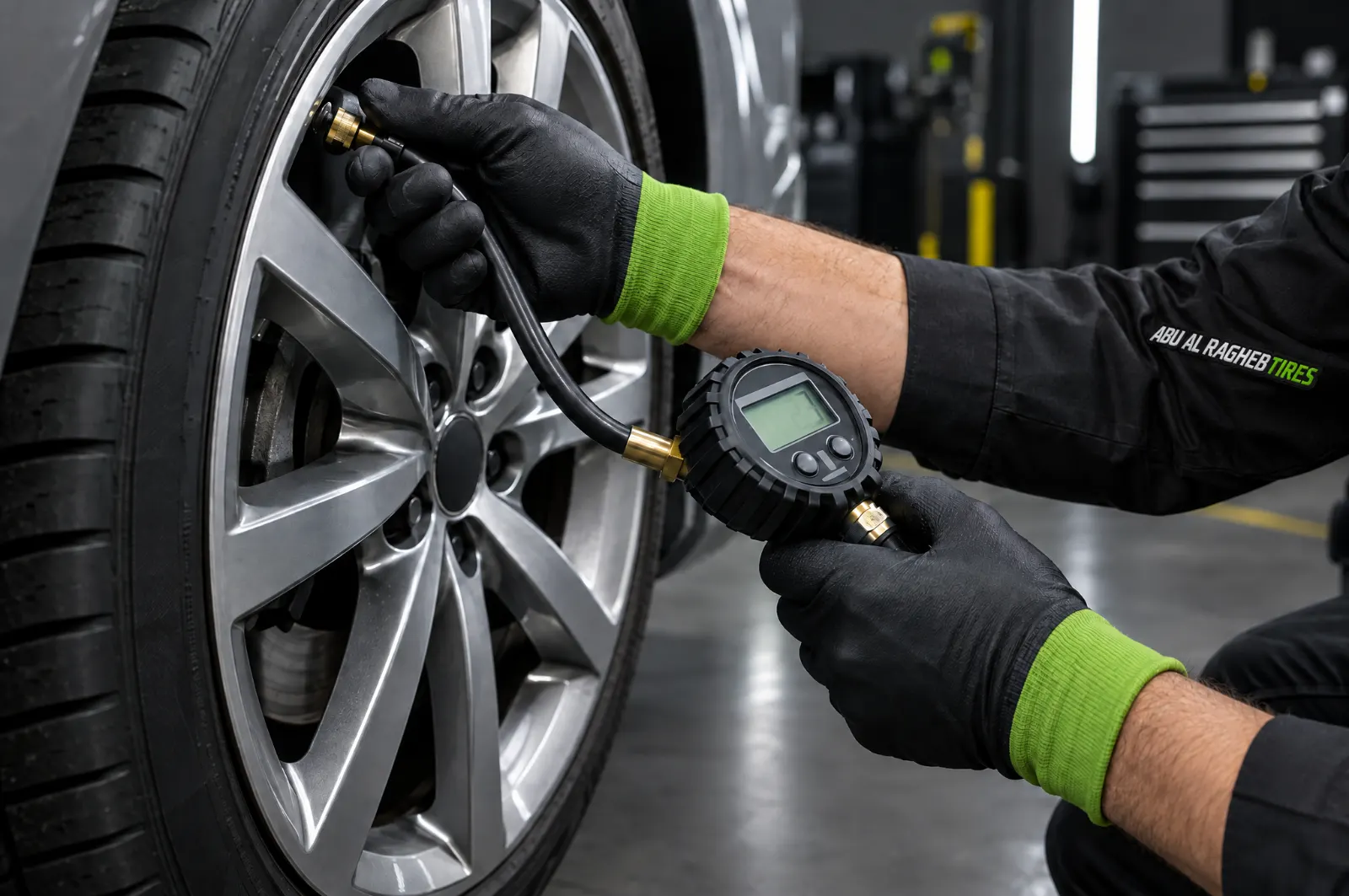
Where to find your pressure
Look inside the driver's door frame, the fuel flap or the owner's manual. You will see front and rear pressures, sometimes a higher figure for a fully loaded car. The number on the tire sidewall is the maximum the tire can hold — never use it as your everyday pressure.
Check it cold
Pressure rises as a tire warms up. Check in the morning or after the car has been parked for a few hours. A tire checked after a long drive can read noticeably higher than the same tire cold.
Heat and pressure in Jordan
As a rule of thumb, tire pressure changes by about 0.1 bar (1.5–2 psi) for every 10 °C change in temperature. A tire set correctly on a cool winter morning will read higher on a summer afternoon on the Desert Highway. Do not let air out of a hot tire — check again when it is cold.
Under- and over-inflation
- Too low: wears the edges, wastes fuel, overheats on the highway and raises the risk of a blowout
- Too high: wears the centre, reduces grip and makes the ride harsh
- Off-road on sand: lower pressure helps, but re-inflate before you return to asphalt
Common questions
How often should I check?
Once a month and before a long trip, including the spare.
Is psi or bar on my sticker?
Often both. 2.2 bar is about 32 psi.